The Truth About Spelling Bee Pangrams: '-tion' Is Rarer Than You Think
Published May 13, 2026 · about 6 min read
Walk into any Spelling Bee or Hive strategy thread and the same tip will be pinned at the top: look for words ending in -tion, -ness, -ment or -ful. Those, they say, are your pangram candidates. We checked. Across all 2,009 English Hive pangrams in the DailyWordGames.org archive, those four suffixes together cover just
94% of pangrams do NOT match the standard suffix tricks.
The popular suffix rule covers only a small slice of the space — and chasing it costs solving time when the real pangram sits somewhere else.
What is a pangram in Hive?
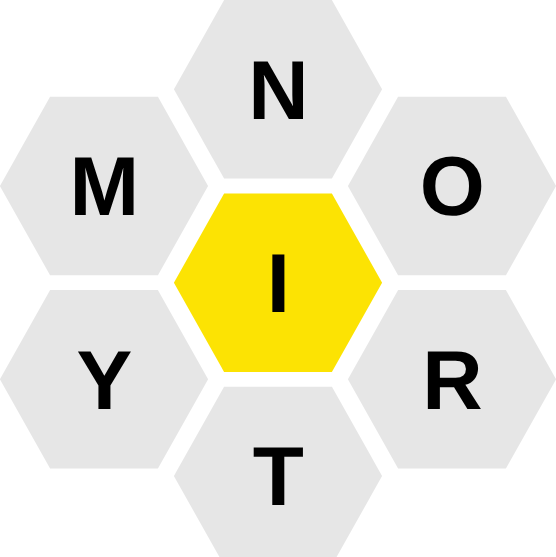
A Hive puzzle (the Spelling Bee-style game) gives you seven distinct letters arranged around one required centre letter. A pangram is any valid word that uses all seven letters, with each letter appearing at least once. Finding the pangram is worth a big bonus and is usually the difference between a solid score and a Genius-tier finish.
The problem: nothing in the puzzle points at the pangram. You have to construct it from the available letters, the required centre letter and your own vocabulary. That's where the suffix shortcuts come in. They look like a clean way to narrow the search. They aren't.
What English pangrams actually end in
We scanned all 2,009 English pangrams for the standard "trick" suffixes that strategy posts recommend:
The headline number: only 62 of 2,009 English Hive pangrams end in -ness. That's 3.1%. Add the four suffixes together and you get 122 pangrams. The remaining 1,881 – about 94% of the archive – follow none of the standard suffix patterns at all.
Why the tip caught on anyway
The advice isn't pulled from thin air. It has a real intuitive logic: if you have to use all seven letters, productive English suffixes like -tion and -ment seem like a natural place to absorb four or five of them at a stretch. And occasionally that works – FUNCTION, JUNCTION, DECREMENT and EXCITEMENT are all genuine pangrams that the suffix heuristic would catch.
The problem is the silent jump from "some pangrams end this way" to "look for pangrams that end this way". The first is true. The second sends you hunting through a tiny corner of the space while 94% of the actual pangrams sit somewhere else.
The deeper reason: English pangrams tend to be compact, slightly unusual words rather than long suffix-stacked derivatives. The length distribution makes that obvious. The most common pangram length is 7 letters (707 pangrams), followed by 8 letters (623). Average pangram length: 8.2 letters. Most English pangrams are short, dense, and don't carry a standard suffix at all.
What actually helps
If suffix-hunting covers only a sliver, what should you focus on? Based on the data:
- Anchor on the rare letter. Most pangram puzzles have one or two letters that are unusual in English – J, Q, X, Z, K, or sometimes V or W. The pangram has to include all seven, so the rare letter is the tightest constraint on the search. Start there and work outward.
- Use the centre letter as a second anchor. The centre letter must appear in every valid word, including the pangram. Ask: which short, dense words built around the centre letter can plausibly stretch to seven distinct letters?
- Think compact, not compound. The data says pangrams skew short (7–8 letters dominate). That favours single root words and short derivations over long suffix-padded forms. Long pangrams like SUSPENSIVENESS exist, but seven- and eight-letter single-root words are by far the most common shape.
- Keep suffix knowledge as a backup, not a plan. The 3.1% of pangrams that end in -ness are real. If the available letters happen to allow that ending, it's still worth checking. The mistake is treating that scan as your primary strategy.
An honest Hive strategy
Hive is hard because the pangram search space is huge and the cheap heuristics don't hold up empirically. That's not a flaw in the game – it's the point. When one rule of thumb misses 94% of the pangrams, the game stops being a pattern-match exercise and starts being a vocabulary one.
The good news: every day you play, you build the only thing that actually pays off – a deeper feel for which letter combinations produce real English words. There's no shortcut. Every solved pangram nudges you closer to the kind of intuition that makes the next one easier.
Test your pangram instinct on today's seven-letter puzzle.
Play Hive NowThis article is based on an automatic analysis of all 2,009 English Hive pangrams in the DailyWordGames.org archive. The data is recomputed on every site build.